KOREAN LITERATURE CORNER - October 2026
By Josh Kim
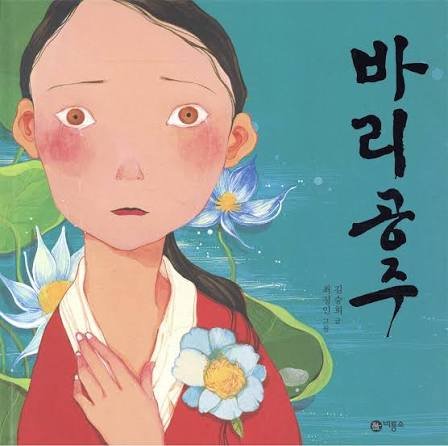
Illustration by Jung-in Choi.
The Abandoned Princess: Bari Gongju
바리공주 이야기
Long ago, a king and queen desperately wanted a son. Instead, they had six daughters. When their seventh child was also a girl, the king ordered the newborn abandoned. She became known as Bari, or Baridegi — the abandoned child.
Bari survived and grew up far from the royal family. Years later, her parents became gravely ill. They learned that only medicinal water from a distant otherworld could save them. The king and queen asked their six older daughters to make the dangerous journey, but each refused.
Then they found Bari — the daughter they had cast away.
Despite what her parents had done to her, Bari agreed to go. She traveled beyond the ordinary world in search of the life-giving water. Korean shamanic traditions preserve many versions of what happened along the way. In versions from Seoul and the surrounding central region, Bari eventually meets the guardian of the medicinal water, serves him, marries him, and returns with the medicine her parents need.
Bari succeeds where everyone else would not. In some versions, she returns after her parents have already died and uses the water to restore them to life.
But Bari’s story does not end with saving her family. She becomes a sacred figure associated with guiding the souls of the dead from this world into the next. Her story is not simply a folktale: it is one of Korea’s best-known shamanic narrative songs and has traditionally been performed during rituals for the dead.
There are more than one hundred recorded versions of the Bari story, with important differences between regions. In Seoul’s jinogigut, a shamanic ritual intended to guide the deceased to the afterlife, Bari’s story appears as part of the ritual tradition. Across the different versions, however, the central reversal remains remarkably powerful.
The daughter who was rejected becomes the one willing to save the people who rejected her. The abandoned child becomes a guide for others making the most difficult journey of all — from the world of the living to the world of the dead.