
Our Twisted Hero by Yi Mun Yol
By Cynthia Salett
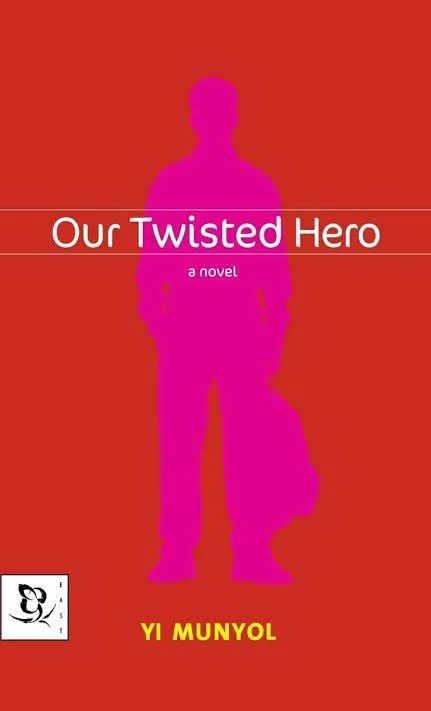
On October 25th our dedicated book club members gathered for a lively discussion of Yi Munyol’s Our Twisted Hero. My first thought was that the 120 page novella presented a fascinating and complicated perspective on the concept of “Hero”. When Eun explained that the original Korean title was, “Our Distorted Hero,” something clicked. The hero was a shadow, a distortion, a small person trying his best to survive in an untenable environment - the original title had it right.
A little background on this brilliant novel, Yi Munyol finished Our Twisted Hero in 1982, but was encouraged to delay publication until June of 1987. Many of you know the history well enough to guess the reason, but I’ll elaborate for those who might not. Chun Doo-hwan was still president and the country was only two years out from the Gwangju massacre. The Seoul Olympics was scheduled for the fall of 1988 and therefore the government had enacted an extremely controversial policy to remove “questionable” people from Seoul in order to project an image that masked the human suffering the country was still facing after the devastation of the Korean war.
Yi Munyol’s novella, although set in a boys’ middle school with a focus on the abuses of bullying, is actually an allegory against the abuses and repressions of dictatorial rule. It was thought, in 1982, that the subject was too controversial and therefore publication was delayed. Even so, Our Twisted Hero was immediately recognized as an important and significant piece of literature. Yi Munyol won the Yi Sang Literary Award for 1987, and the story went on to be adapted for film by Park Jong-won in 1992. In South Korea it is still required reading for middle schoolers aged 12-14.
The story centers on Han Pyongtae, a twelve year old boy forced to leave his comfortable life in Seoul as a result of his father’s demotion and reassignment to a small town. Pyongtae finds himself in a school environment that is nothing like his former school in Seoul. His class is ruled by Om Sokdae, the class monitor, who behaves more like a Lord than a fellow student. Yi Munyol keeps the focus of the story on Pyongtae’s experiences as he tries to navigate his new reality. At first, Pyongtae tries various ploys to overthrow Sokdae and remake the classroom into a “democracy” run by majority rule. When he fails, making his life miserable in the process, he resigns himself to life as one of Sokdae’s subjects and does his best to ingratiate himself to Sokdae. I won’t spoil the ending because if you have not read Our Twisted Hero, you absolutely should.
Our group had many interesting observations eliciting a rousing discussion on a range of subjects including: the ethics surrounding bullying and teacher involvement or the lack thereof; the extra layer of control dictatorships place on education in Korea and how it contrasts with problems in the US education system; and under what conditions children’s births are registered in Korea and how the laws have recently changed. Everyone in the group agreed that the book was multilayered and could be read as a straightforward story about school bullying and the adverse effect on the children who suffer from it, or as a complex criticism against dictatorial rule and the challenges surrounding decision-making within democratic rule. Eun pointed out that within the allegory of the story, the first teacher, who ignored Sokdae’s abuses, was representative of American’s ambivalence towards the suffering in South Korea after active fighting ended.
The theme of opposing views, in regards to how a government should support its people, also lead to an intense discussion of not only literature but film and TV series. We discussed the struggles filmmakers and writers are still facing today when trying to include difficult historical events in their stories.
The meeting ended with a question. Who was the Twisted Hero in the story? Was it Pyongtae or Sokdae? We came to a general consensus, but what do you think? Read the book and let us know your thoughts at our next meeting.
November Dosan Hakdang: Plant Lady by Kang Min Young
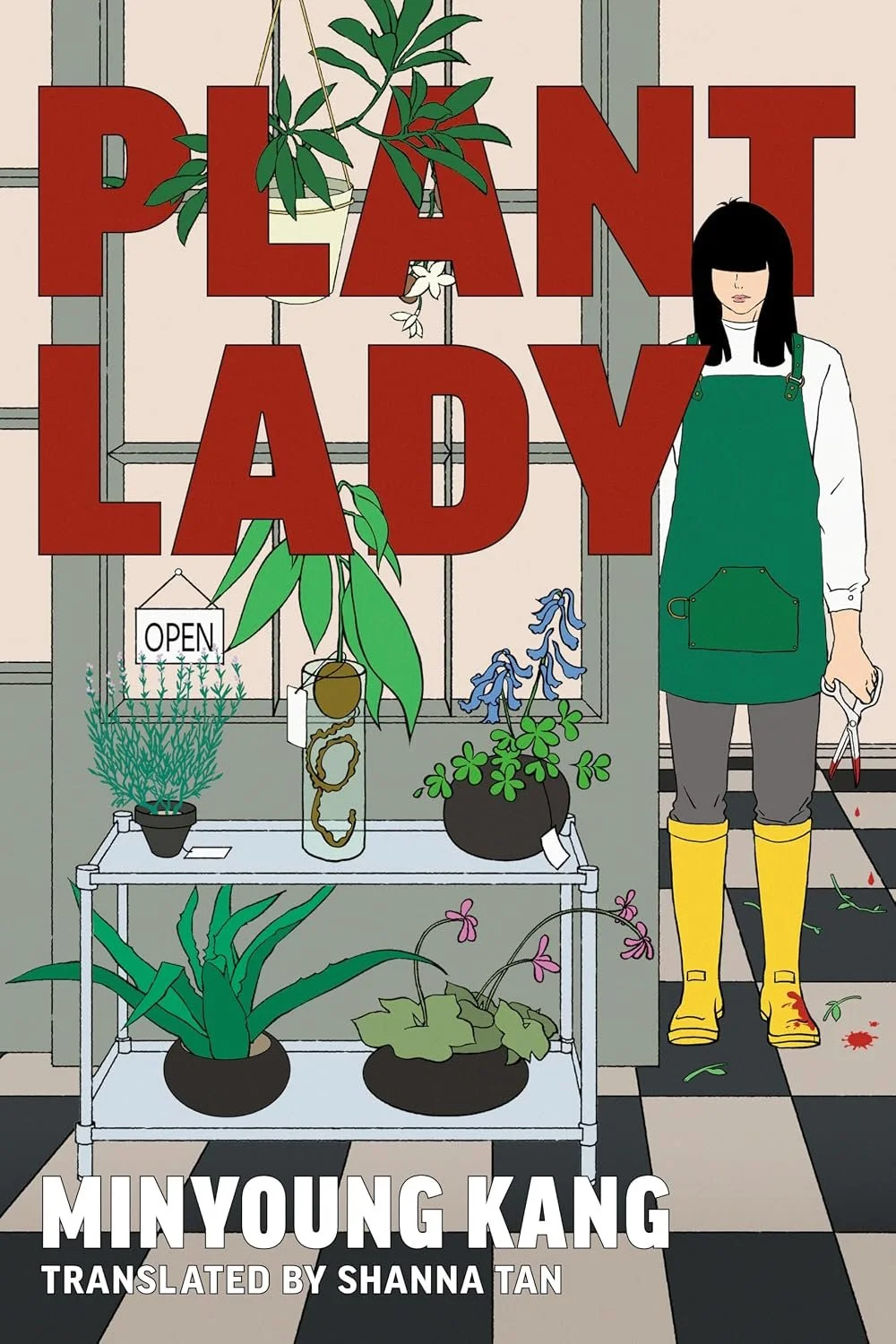
Next month we’ll be reading Plant Lady by Kang Minyoung, the story of a seemingly mild mannered Plant Store owner with deep and foreboding secrets. Doesn’t that sound tempting? Come join us! We love seeing new faces in our group. Reading Korean literature is a fantastic way to get to know the voices of South Korea normally unavailable to most of us. Your appreciation for the richness of Korean history and culture will jump tenfold.
Here is our intro to the November book:
In the heart of a quiet town, a young woman tends to her plant shop, but beneath the surface of her lush, green sanctuary lies something far darker….
Will you dare to disrespect her plants?
Tucked away in the corner of a neighborhood in Dosan, South Korea, is the Plant Shop. Shop owner Yoohee has started anew, and her meticulously grown foliage thrives under her tender care. To both her customers and herself, Plant Shop is a refuge, where petunias and marigolds bloom and the air itself is like an elixir of peace.
By day, Yoohee dispenses advice on gardening, but she also finds herself offering a special service off the clock. Women who are at their wits’ end come to her about a man they hope might disappear from their lives. Pulling extra hours is taxing, but Yoohee has encountered—and dealt with—these kinds of men in her own life, men who treated her (and her beloved plants) with utter disrespect. So as night falls, Yoohee trades her apron for a shovel and a hoe and disappears into her moonlit garden. There, she buries not just the remains of the day, but also the bloody remnants of a few unfortunate encounters.
As men begin to disappear…will anyone ever suspect the Plant Lady?
A highly acclaimed novel from South Korea, Plant Lady brings atmospheric tension and delicate humor to a story of obsession and misogyny that will keep you rooted right to its simmering last page.
R.S.V.P. to join us here on November 22, 2026 at 2PM.
