BOOK CLUB REPORT - October 2026
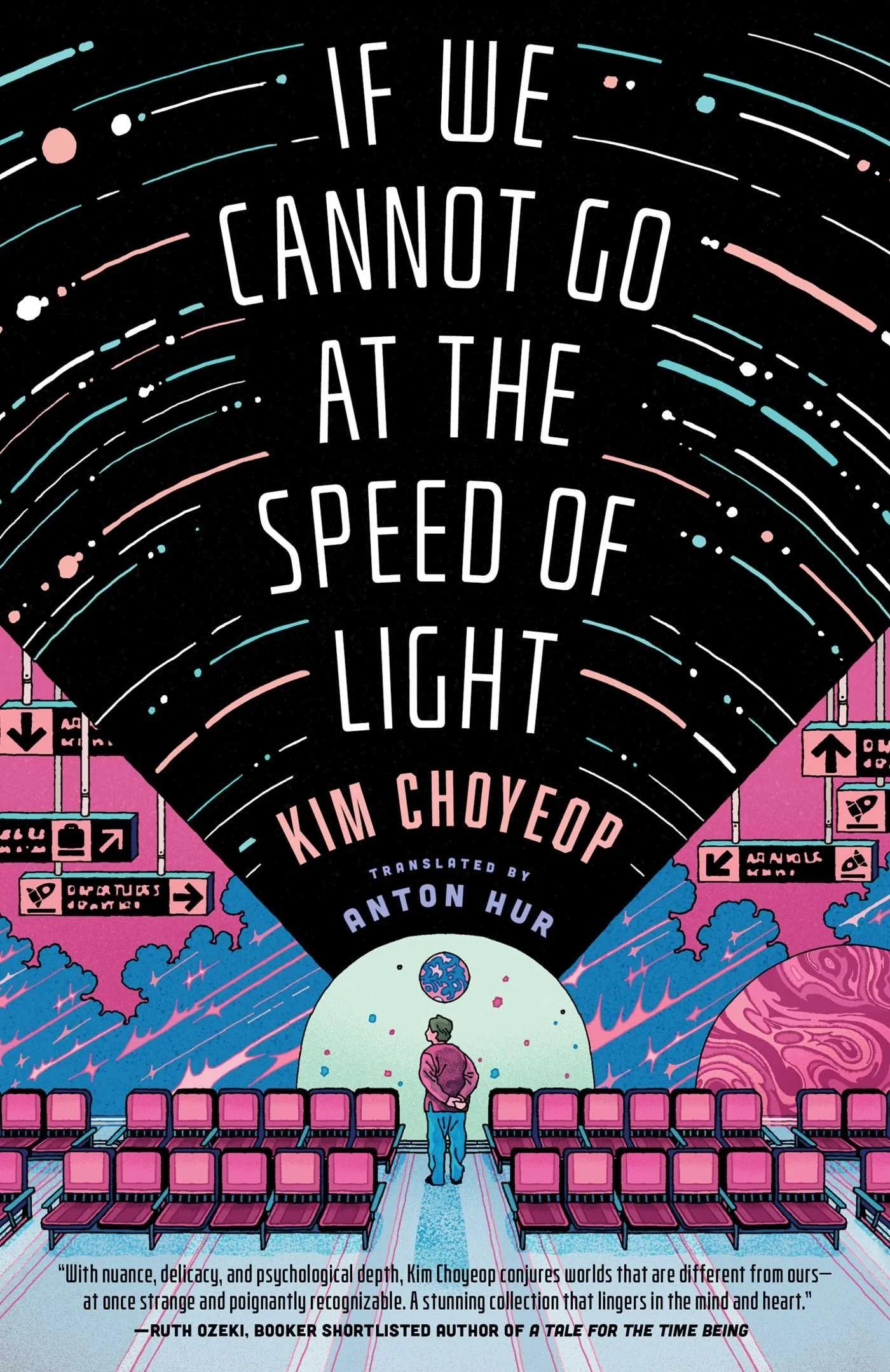
If We Cannot Go at the Speed of Light by Kim Cho Yeop
By Sharon Stern
A reminder that most of the books that we read for Dosan Hakdang Book Club can be found in libraries or by inter-library loan and most are available both electronically and for loan electronically via your library.
In September, we read the book If We Cannot Go at the Speed of Light by Kim Cho-yeop and translated by Anton Hur. The book is a collection of seven science fiction short stories that simultaneously deal with a number of women’s social issues in society while painting worlds that are possibly out in the distant future or maybe only live in fantasy. This short-story collection was a best-seller in Korea when it came out in 2019. The English translation just came onto the market this year.
The first story explores the idea of a collective unconscious – not an unfamiliar subject – but a conscious that is coming to Earth from a distant planet that jettisoned its existence toward Earth before the planet imploded and ceased to exist.
The second tells the story of a grandma who was an astronaut that made first contact with another species, only to not be believed after she was finally rescued.
The third takes us through the life of an elderly female scientist who perfected the science of cryonics, but who sacrificed being with her family for her career. She now waits on an abandoned space station, cryopreserving and unfreezing herself, while she waits for a transport that no longer exists to take her where her husband and son lived, but have long since been deceased – hoping for an impossible reunification.
The fourth explores a physical substance that embodies pure emotions that can be held in your hands and absorbed and why someone might want to hold negative emotions like this.
The fifth is a story of a pregnant woman, estranged from her mother who is deceased, but now wanting to connect to her. Her mother’s mind is stored in a library, where a literal brain dump can be uploaded when a person dies. But the index to get to her mother has been deleted and she can’t be accessed.
The sixth deals with a society where anyone with flaws has been genetically altered to be what society considers perfect, but there is a hidden community where flawed people still exist. Children from this village take a pilgrimage to the “perfected” community for a time when they reach adulthood. Some decide to stay, even though they are discriminated against, and some decide to return to their isolated village.
And the last story deals with the discovery of a wormhole near Mars, but in order for humans to try to travel through it, they have to undergo tremendous bodily modifications. A woman, criticized as not good enough to be one of the astronauts, goes through the modifications, only to bail out and disappear at the last minute. Her niece, who looked up to her tremendously, decides to follow her footsteps and become the first woman through the wormhole.
A number of book club attendees noted that science fiction is not really their preferred genre and a number of people also noted that they didn’t particularly like short story collections. However, almost all of us found some very touching parts in the stories. They reminded me personally of classic Star Trek stories – alien lands and as-of-yet non-existent technologies, but very, very human stories. The stories all explore ethical dilemmas and very current issues that women face. Are women allowed to really have an equal shot at the same jobs? Why are women’s stories not always believed? Why do women have to choose between careers and family? Should we ever consider modifications to our bodies in order to either be more “perfect” or go places we were never meant to? And as people today begin using AI to preserve holographic likenesses of their deceased loved ones (yes, that is a thing already), should we even try to fool ourselves into believing that a copy or a data dump of a mind is the same as a living person? I doubt that Kim Cho-yeop writing these stories before 2019 realized how extremely quickly some of her futuristic technologies wouldn’t look that futuristic. These weren’t just imaginative sci-fi fantasy stories – they helped us explore some very profound questions that are very much relevant in today’s society.
We had a very touching conversation about the role of women in American society, in Korean society and in Korean-American society. We also spent some time looking at the placement of the women in the stories – either as narrator or protagonist – and how Kim Cho-yeop predicts that women struggle for equality and relevance even in the future.
Even if science fiction and short stories are not normally your thing, we strongly recommend you giving this collection a try!
October Dosan Hakdang: Our Twisted Hero by Yi Mun Yol
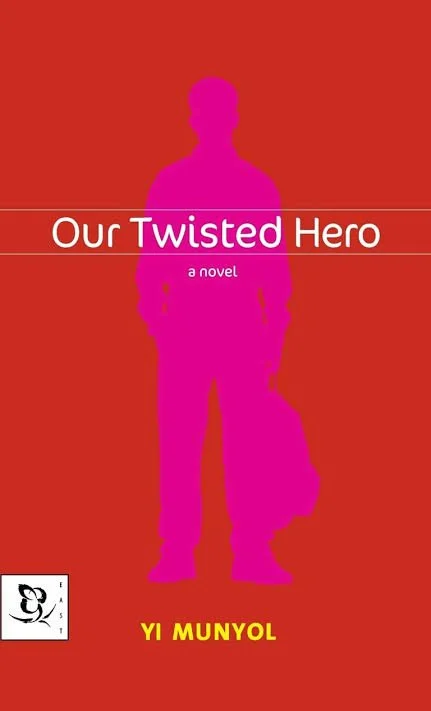
In October, we are reading Our Twisted Hero by Yi Munyol, translated by Kevin O’Rourke. This book was published in 1987 – a year of great turmoil in South Korea and the year the country began to transition away from dictatorship into a democracy. The book is, in fact, a political allegory about this transition. It examines the oppression of totalitarianism on intellectual opposition. It was a best-seller in South Korea and received the Yi Sang Literary Award, which is one of South Korea’s most prestigious literary prizes.
The story is told by a middle-aged man, Han Pyong-tae, who is recalling his past experience when he, at 12 years old, moved to a small town. He believes this transition will be easy for him, coming from the big city, but he is surprised to find the 5th grade class president manipulating all of the students and even the teacher. He controls them with intimidation and violence. He makes them write his papers and take his tests. He steals their belongings. Pyong-tae thinks he can take on this bully, but his challenges leave him marginalized and picked on. When he finds no one to support him, including parents and teachers, he gives in. Not until a new teacher comes to the school can everyone see what life is like when a dictator is not in charge and people are free to make their own decisions.
In 1992, this book was turned into a movie and the movie is available for viewing on YouTube here.
This is a short book and an easy read. Please join us October 25th at 2 pm Eastern via Zoom for a discussion of this historically significant novel. You can R.S.V.P. here.
November Dosan Hakdang: Plant Lady by Kang Minyoung
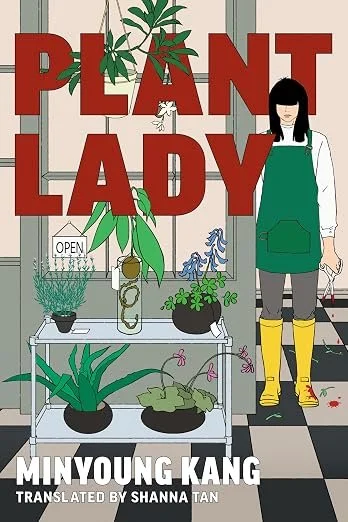
In November we will be reading Plant Lady by Kang Minyoung, translated by Shanna Tan.
In the heart of a quiet town, a young woman tends to her plant shop, but beneath the surface of her lush, green sanctuary lies something far darker….
Will you dare to disrespect her plants?
Tucked away in the corner of a neighborhood in Dosan, South Korea, is the Plant Shop. Shop owner Yoohee has started anew, and her meticulously grown foliage thrives under her tender care. To both her customers and herself, Plant Shop is a refuge, where petunias and marigolds bloom and the air itself is like an elixir of peace.
By day, Yoohee dispenses advice on gardening, but she also finds herself offering a special service off the clock. Women who are at their wits’ end come to her about a man they hope might disappear from their lives. Pulling extra hours is taxing, but Yoohee has encountered—and dealt with—these kinds of men in her own life, men who treated her (and her beloved plants) with utter disrespect. So as night falls, Yoohee trades her apron for a shovel and a hoe and disappears into her moonlit garden. There, she buries not just the remains of the day, but also the bloody remnants of a few unfortunate encounters.
As men begin to disappear…will anyone ever suspect the Plant Lady?
A highly acclaimed novel from South Korea, Plant Lady brings atmospheric tension and delicate humor to a story of obsession and misogyny that will keep you rooted right to its simmering last page.
R.S.V.P. to join us here on November 22, 2026 at 2PM.