KCP Journeys: Have You Eaten? A Month of Food in Seoul
KCP Journeys: Joshua Kim
By Josh Kim
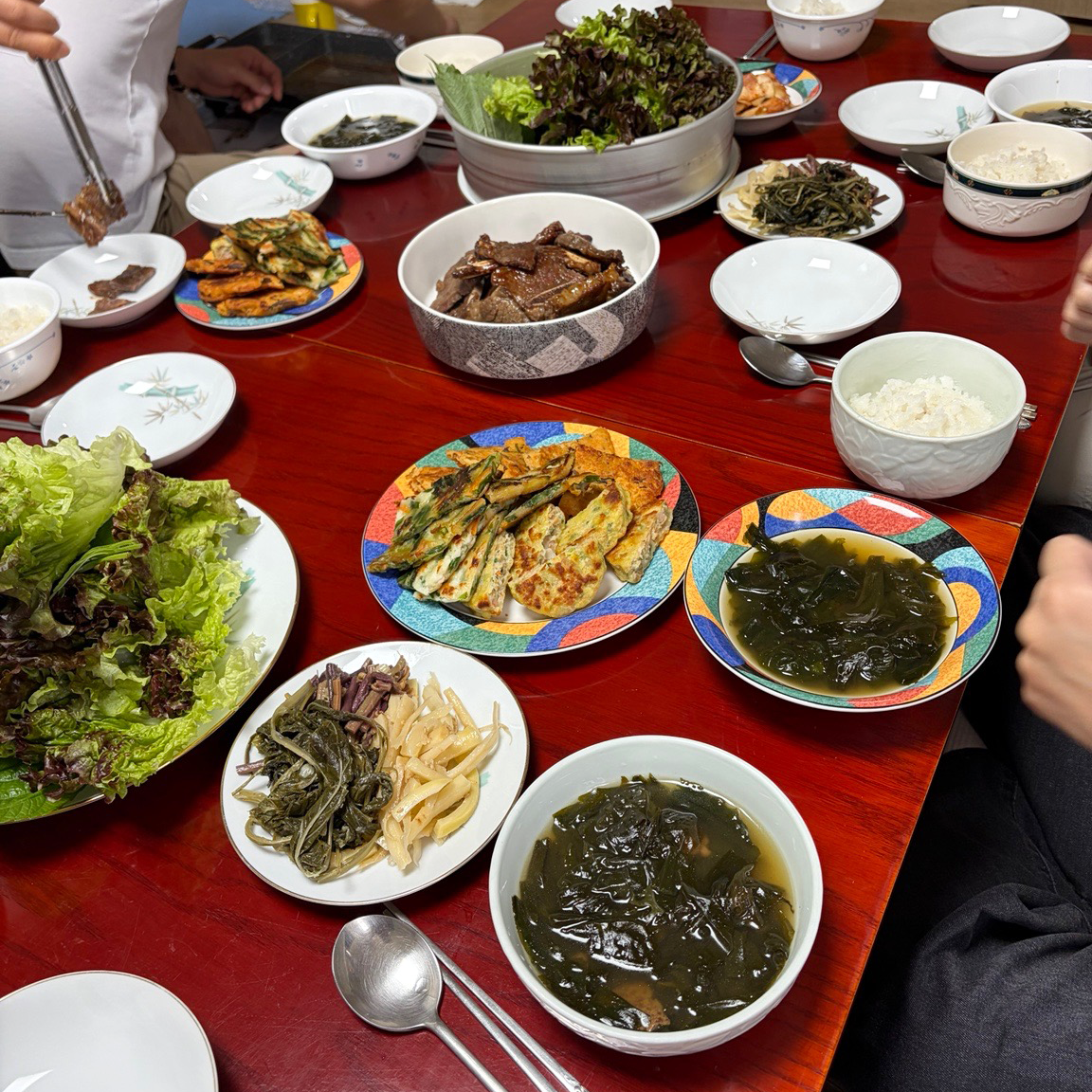
A family meal during Chuseok.
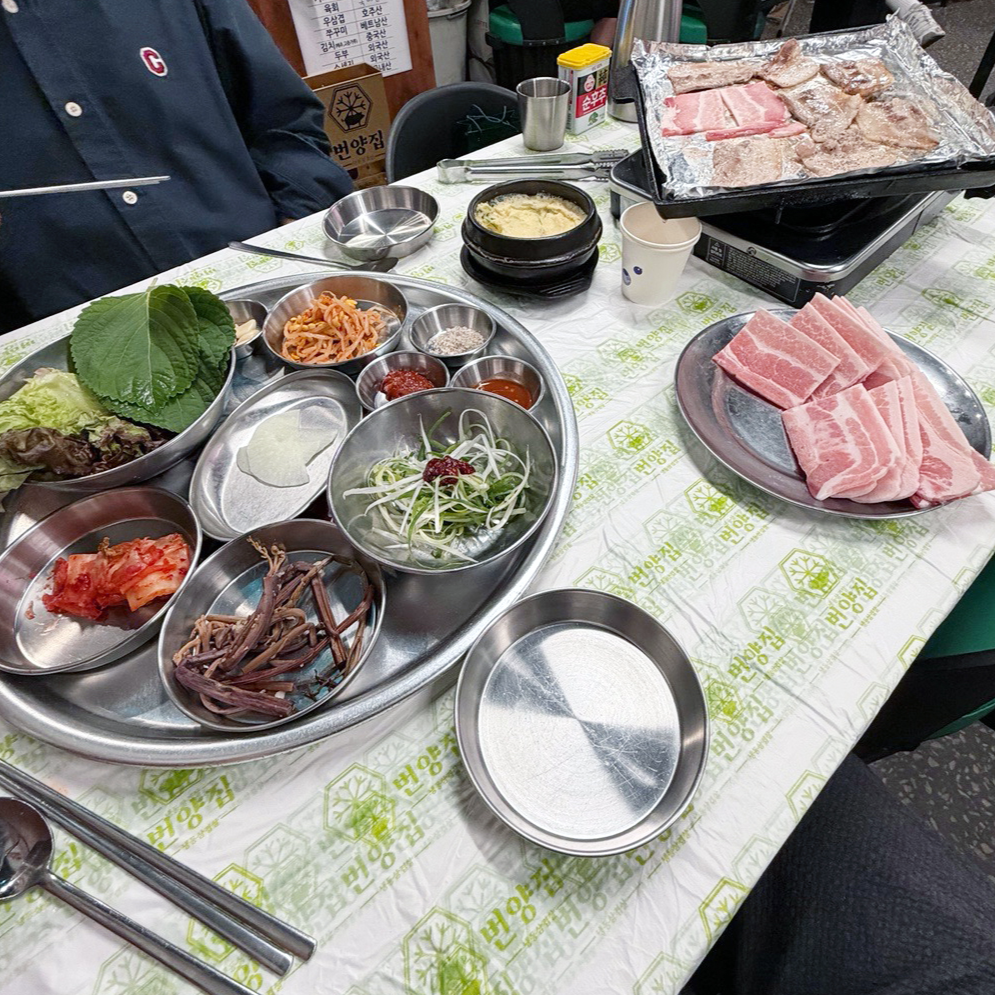
Samgyeopsal (삼겹살), grilled pork belly
For the past month in Korea, I’ve eaten constantly. Gimbap (김밥) and fried chicken (치킨), samgyeopsal (삼겹살) cooked over a shared grill, bibimbap, noodles, bingsu, countless dishes of banchan, and one memorable bowl of chueotang that I’m not sure I’ll be trying again – but hey, when in Seoul.
During Chuseok (추석), I was eating with my family and had reached the point where I was so full, baebulleoyo (배불러요). My grandmother disagreed though. Meogeo, meogeo (먹어, 먹어), she kept saying. Eat, eat. Being full didn’t matter.
It shows the importance of food in Korea as, for generations, hunger was a recurring reality on the peninsula. There was even a name for the difficult spring period when the previous harvest had run out but the barley crop was not yet ready: 보릿고개 (boritgogae), literally the “barley hump.” The hardship became entrenched during the Japanese colonial period, continued through the Korean War and its aftermath, and did not disappear until Korea’s rapid development in the 1960s.
The shortages were recent enough to shape government policy. After poor harvests in the early 1960s, South Korea promoted 혼분식 (honbunsik) — mixing rice with barley and other grains and eating more flour-based foods. Restaurants were required to mix other grains or noodles into meals, and by the late 1960s there were designated “no-rice days” when restaurants could not sell rice dishes during certain hours. For many Koreans alive today, food scarcity is not ancient history – they still remember it.
Have you Eaten? 밥 먹었어요?
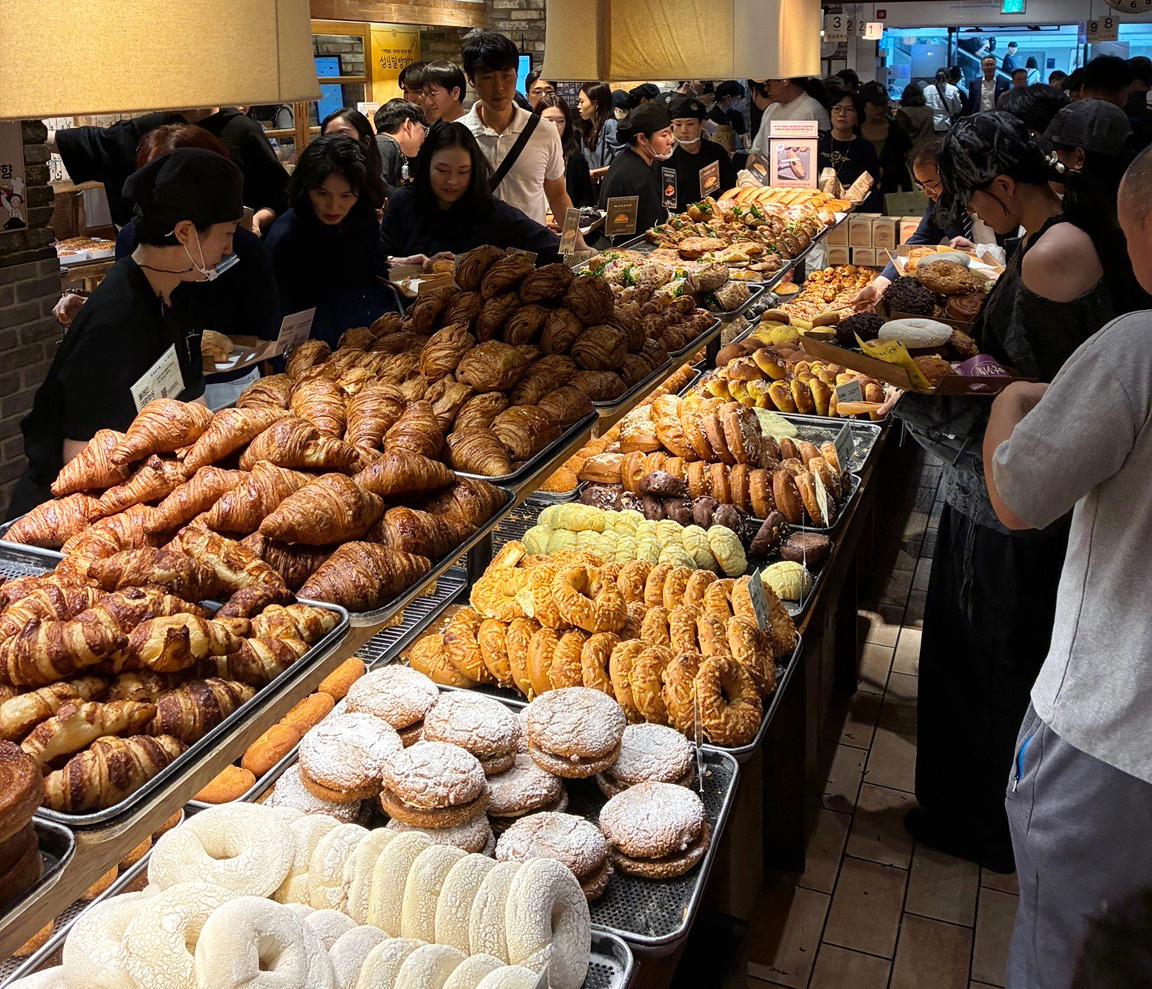
성심당 (Sungsimdang) – a famous Daejeon bakery
밥 먹었어요? — Literally, “Have you eaten?” But it’s a common way to greet a friend. Instead of saying “Hi, how’ve you been?”, this stands in place of it. 배고파요? Baegopayo? You’ll hear a lot. “Are you hungry?” One friend actually told me when she started dating her now-husband, this was the most common thing he would ask. And to make sure they went on a date, she’d always respond, “Yes”. ☺
Seoul today offers an almost dizzying abundance of food. That abundance sits beside a not-so-distant history when a full bowl of rice could not be taken for granted. That alone doesn’t explain Korean food culture, but it does help show why feeding someone can carry so much meaning.
Meogeo, meogeo, my grandmother says. “Eat, eat.” But also, as Koreans are so able to do: there’s words behind the words. “Eat, eat – love you, love you.”
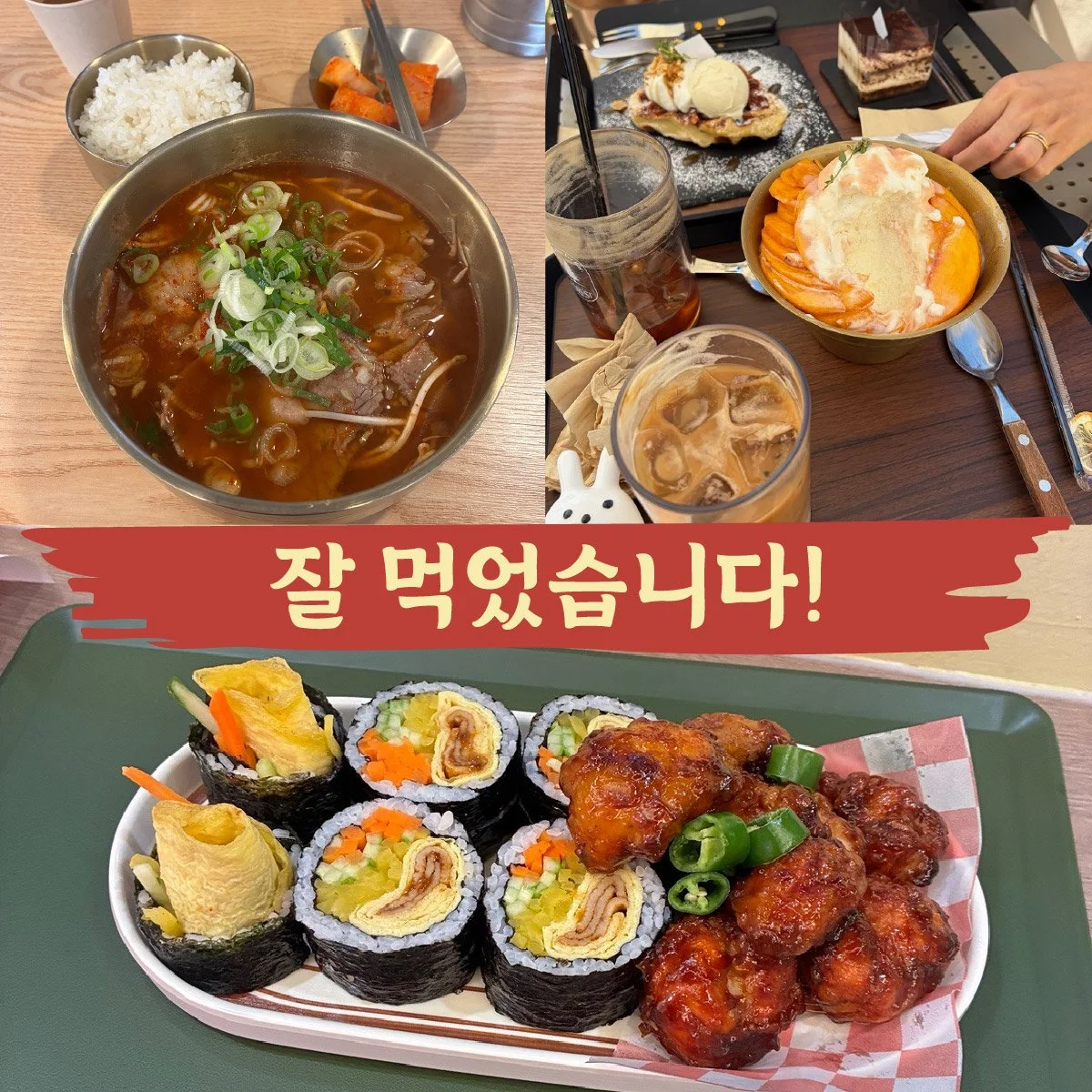
Bingsu (빙수), Yukgaejang (육개장), and Gimbap (김밥) Photo Credit: Josh Kim