THIS MONTH IN KOREAN HISTORY - October 2026
National Foundation Day: The Day the Heavens Opened
By Sharon Stern
October 3rd is National Foundation Day in Korea. It is called Gaecheonjeol (개천절) in Korean – The Day the Heavens Opened. This is a national holiday in Korea, but the celebration is connected to the ancient history of the Korean peninsula and origins of the peoples that lived there. We will explain the history of the holiday itself, but to talk about the meaning of the holiday, we also need to explore not only the physical history of the people of the peninsula, but the deeply entrenched myths about their origin as well. Come with us as we look way, way back to the very beginnings of humans on the Korean peninsula.
*Throughout the article - click on any image to enlarge
Introduction
Article on Dong-A Ilbo about designating October 3 as day of commemoration of National Foundation Day (건국기원절), dated November 9, 1924. The date was initially celebrated on October 3 in the lunar calendar.
National Foundation Day was established at point in time when information about Korea’s history and culture were under pressure from Japan. What it meant to be Korean was being questioned and the creation of the holiday was meant to connect Koreans to a unique history, language and cultural identity. That was a political decision. It was an act of preservation. But at the core of the celebration is Korea’s creation myth, which is ancient and points to a time when the intersection of historical facts and myths were blurred. The documentation about this era wasn’t written down until centuries later, blurring those distinctions even further. Let’s look at each of these pieces as we examine the roots of this important national holiday.
History of National Foundation Day
Photo of celebratory ceremony on October 3, 1920 (in the lunar calendar) in Shanghai, where Korean Provisional Government was installed.
On October 3rd, South Korea celebrates National Foundation Day. The history of the holiday dates back to the early 1900s. In Korean the day is called Gaecheonjeol (개천절), which literally means Heaven Opening Day. That phrase is explicitly used in the Korean creation myth and we will look at that in another section.
In 1909, just prior to Japanese occupation but after Korea had been forced to sign an agreement becoming a protectorate of Japan, Korean intellectuals established National Foundation Day as a way to instill pride in Korean history and heritage. These intellectuals selected the date of the third day of the tenth month in the lunar calendar for the celebration.
During Japanese occupation the holiday was suppressed. In January of 1919, Emperor Gojong, the last leader of the Joseon Dynasty, died. It was rumored that Japan had poisoned him, which is still speculated about today. His death and funeral began anti-occupation protests that culminated in the March 1 Movement.
The bloody suppression of the March 1 Movement by the Japanese continued to motivate the Korean Resistance Movement, even though many Koreans ended up fleeing the peninsula. In April of 1919 Koreans established the Provisional Government of the Republic of Korea in Shanghai to work toward Korean independence from Japan. The Provisional Government made National Foundation Day a national holiday for Korea, emphasizing the origins of the Korean people by embracing its unique and separate history through its creation myth. The newly formed government held a commemorative event on October 3rd for the Gaecheonjeol.
After WWII and Japan’s surrender, National Foundation Day was re-established as a national holiday in 1949.
The holiday celebrates a mythological moment in Korea’s ancient history, but the true history of Korea is inextricably intertwined with the myth. Let’s look next at the documented history of human activity on the Korean peninsula.
Korea’s Archeological History
How long have people lived on the Korean peninsula? It is estimated that the Korean peninsula saw human activity 700,000-500,000 years ago, as seen in the discovery of hand tools in caves, but radiocarbon dating of Paleolithic sites on the Korean peninsula factually proves human activity at least 40,000 years ago. Stone tools and Hominid remains date from the Paleolithic age 40,000 years ago.
빗살무늬 토기 Bissalmuneui Pottery
Bissalmunui Pottery
Pieces of pottery are often artifacts that remain after most other traces of human activity are gone. The earliest pottery found in Korea is from the Neolithic Age and are of Bissalmuneui Pottery (Sino name: Jeulmun Pottery) that date to 8,000 BC, just after the last Ice Age. At least 500 sites from this period have been identified on the Korean peninsula, though only 50 have been excavated. The earliest evidence of more permanent settlements with pit houses appears around 6,000 BC. A hand axe accidentally found by a US soldier in 1978 at Jeongok-ri (Yeoncheon) proved that Korea was part of the global Paleolithic migration of people, previously believed to only include people from Africa and Europe.
Patterns of human activity changed a lot somewhere between 3,000-2,000 BC. Pollen dating shows the beginnings of rice and millet cultivation around 3,000 BC, introduced from the Liandong region of Northeastern China. This date aligns with excavated evidence of the creation of pit houses and dolmens. Interestingly, the date of Korea’s origin myth at the center of the National Foundation Day celebration also roughly aligns with the beginning of more permanent settlements and agriculture on the peninsula.
움집 Umjip
Reconstruction of pit house, or umjip
Pit houses or umjim (움집) were living structures dug up to a meter into the ground, creating insulation for the house from the ground. Pit houses existed around the world, but mostly in more northernly regions, where protection from cold and storage of food for harsh winters were important. Pit houses were used by people in Korea up until the Three Kingdoms period, around 375 AD.
Gochang (고창), Hwasun (화순) and Ganghwa (강화) Goindol Sites
Dolmens or goindol (고인돌) are a type of tomb or burial chamber made out of several large stone slabs. Their creation follows the same timeline as the pit houses – around 3,000 BC through the beginning of the Three Kingdoms period, 375 AD. Goindol have been found in Europe, Africa and other parts of Asia, as well as Korea. However, there have been more than 40,000 goindol found on the Korean peninsula – the largest concentration anywhere in the world, leading anthropologists to wonder if this form of burial started on the Korean peninsula and moved outward from there. In Korea, they are found mainly along the coast and along river basins. They are believed to be not simply burial places of very important people, but socially significant symbols and possibly used for veneration of ancestors as well. It is believed that people gathered at the goindol on significant dates to perform rituals, due to the fact that capstones (the large stone on top) are aligned to solar and lunar positions at specific times of the year. The construction of goindol required advanced engineering and social collaboration.
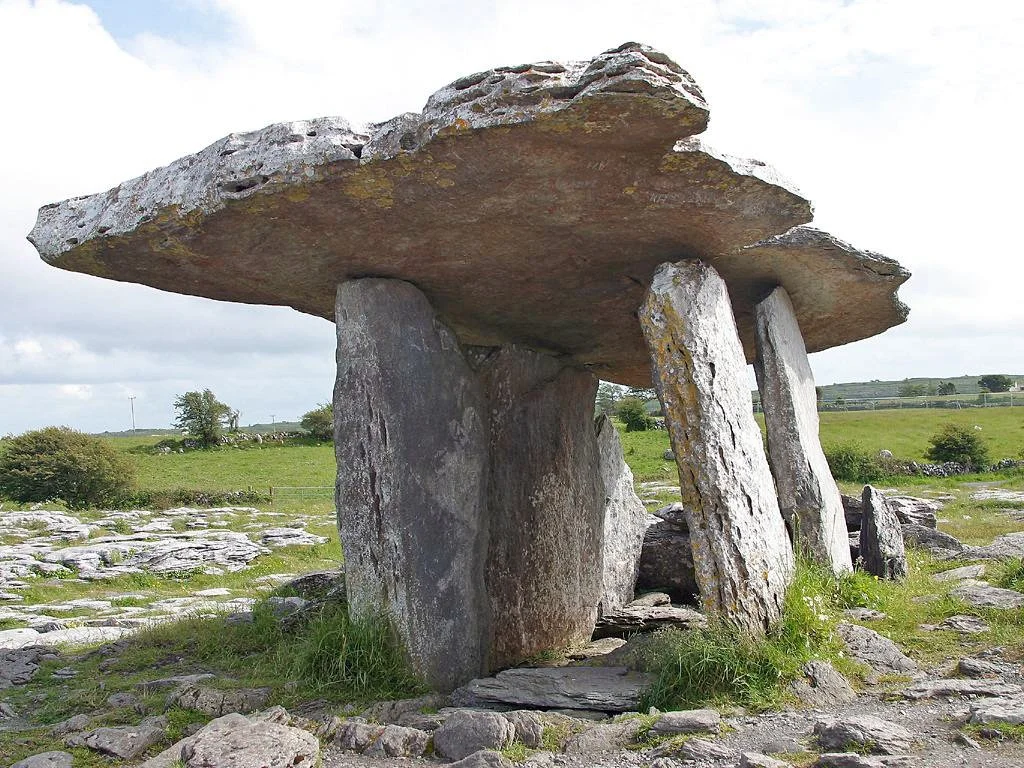
Goindol
Three goindol sites –Gohang, Hwasun, and Gwanghwa–were named UNESCO World Heritage Sites in 2000. The three sites have an enormous concentration of thousands of goindol. These sites are protected and can be visited, but goindol are also present all over the peninsula. Excavation at the sites have revealed not only human bones but pottery and significant jewelry, such as the comma-shaped jade and bone jewelry that is common in Korea all the way through the Three Kingdoms period.
곱은옥/ 곡옥 Comma-Shaped Jewelry
곱은옥/ 곡옥 Comma-Shaped Jewelry
The comma punctuation mark quickly creates a specific shape image for us, which makes is convenient for describing ancient Korean jewelry. Ancient Korean peoples used this shape to create the pendant in necklaces. From around 850 BC through the Three Kingdoms period, curved ornaments, believed to have begun by the use of canine teeth of predatory animals, appeared in Korea. This same shape was later formed using jade, amazonite, crystal and other precious stones and were often found alongside daggers, chisels, arrowheads and other shapes of beads. These comma-shaped beads and jewels are called gogok (곡옥) and appear to have been worn by prestigious members of society, because they were found in goindol. The creation of jewelry shows that a culture is imbuing meaning into an object. Decoration is symbolic and therefore another kind of language – a type of communication. It marks status, age, and role within a group. And the presence of jewelry in tombs also indicates that preserving this story is important to a culture.
반구대 암각화 Bangudae Petroglyphs
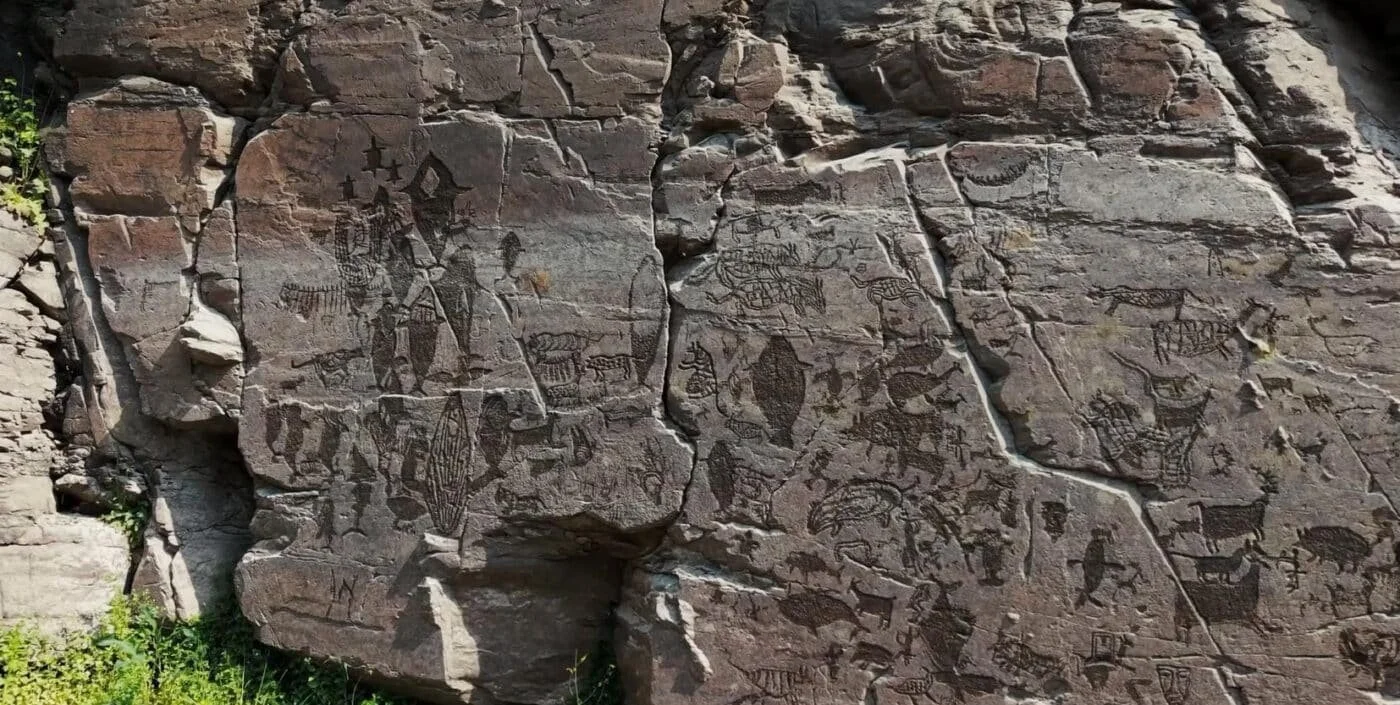
반구대 암각화 Bangudae Petroglyphs, Ulsan, Korea.
Sometime between 6,000-1,000 BC, people upriver from Ulsan Bay, on a branch of the Taehwa River, carved some very unique and important petroglyphs. The Bangudae Petroglyphs are a National Treasure of South Korea and were named an UNESCO World Heritage site in 2025.
This large collection of petroglyphs shows the only known depiction of whaling in petroglyphs anywhere in the world and includes at least five species of whales. Many other types of sea creatures, including turtles, salmon and seals are depicted. Many types of land animals, including deer, tigers, leopards, fox, wolves and racoons are also present. The diversity of different living creatures portrayed is significant. The site shows not only an array of wildlife, but a variety of hunting techniques for different animals. The site was continuously carved over time and includes carvings up to the Silla period.
Flooding, due to the Sayeon Dam, threatens this precious site. The South Korean Government is currently investigating ways to better preserve the site. You can visit the petroglyphs, but you need to plan the visit for a period when the area is not flooded, which includes April-May and September-October. The area also houses the Ulsan Petroglyph Museum. The earlier Cheonjeon-ri petroglyphs are located along the same stream and are also the site of preserved dinosaur footprints. The Daegok-ri petroglyphs are also located here.
고조선 Gojoseon
Map of Gojoseon.
The first established kingdom on the peninsula was Gojoseon (고조선), which, according to the book Samguk Yusa (see below), began approximately 2333 BC.
Gojoseon is also referred to as Old Choseon – the “Go (古)” meaning old. Gojoseon is mentioned in Chinese texts of this period. It isn’t completely clear if Gojoseon existed only on the Korean peninsula or if it also encompassed part of the Liaoxi region of southern China. Gojoseon was the most significant Bronze Age walled-town state in the region. Walled-town states evolved as population centers grew denser and communities, rather than individual family units, protected each other from outside encroachment. The formation of Gojoseon corresponds to the increase in the creation of goindol and changes in the formation of pottery that indicate more sophisticated firing techniques. Bronze creations including swords, spears, daggers, small bells, comma-shaped jewelry and mirrors also appear during the Gojoseon period. Gojoseon was defeated by the Han Dynasty of China in 108 BC.
This was a real kingdom, but its story is embedded with mythology, which we will look at in detail shortly. This mix of fact and myth is evidence that humans are always looking for deeper meaning for what transpires in their lives. Humans don’t simply document their world, they interpret it. Storytelling helps embed deeper meaning to history and elevates the position of specific roles.
Archeology’s Meaning
All of these significant archeological sites and discoveries pinpoint the sophistication of early Korean people and their social structure. Many anthropologists and archeologists believe that modern Koreans have an unbroken line of descendance with their Neolithic ancestors. Understanding how ancestors viewed the world, where exactly and how they lived and what they found important can better help us reinterpret today’s culture.
Korean Origin Myth
All of this archeological and anthropological history is interesting by itself, but when we look at the meaning that people placed on the world that surrounded them, we gain a completely different perspective on those that came before us. At the center of National Foundation Day is the myth of how the first Koreans came to be. Humans have an innate need to know why they exist, how they exist and what their existence means for them.
Korean Mythology
At least some of Korea’s ancient mythology moved into Korean from parts of what are now China. Other pieces mixed with overlapping Japonic cultures in the southern part of the peninsula. Once early myths were established in the peninsula, they became uniquely Korean, though similar and overlapping figures continue to exist in other cultures.
Korean mythology exists in two forms – mythology that was written and is viewed as literary and the ever-changing oral mythology that continues to evolve through shamans and ritual. Shamanistic mythology continues to be told and changes in every telling, depending on the storyteller and the reason for telling the story. The written history of Korean mythology comes from two major sources: Samguk Sagi and Samguk Yusa.
삼국사기 Samguk Sagi
삼국사기 Samguk Sagi.
Samguk Sagi or History of the Three Kingdoms is an historical record of the Three Kingdoms period of Korea. It was completed in 1145 AD. It was ordered to by written by King Injong of Goryeo (1109-1146 AD) and written in Classical Chinese, but include translation tables for more ancient dialects. Historian Kim Pusik and historians that he assembled carefully gathered information about Korean history. At the time, intellectuals studied and memorized the Five Classics of Confucianism from China, but did not pay a lot of attention to uniquely Korean history. Kim Pusik used older historical records that do not exist today, but also used Chinese written history about Korea while excluding Japanese mythology and legends, which have overlap in Korean history. As with all written history, it is shaped by the opinions and biases of the time in which it is written.
Samguk Sagi was divided into 50 books. Originally, each book was written on a scroll. The books contained history of each of the Three Kingdoms, monographs about rites, music and particular political structure, chronologies and biographies. The National Institute of Korean History translated the entire text into Hangul, for modern Koreans to be able to read. It has been digitized and is available online as photographic images of the original, in the Classical Chinese and in Hangul. It has also been mostly translated into English, available in printed volumes, divided by volume into the scrolls pertaining to each of the Three Kingdoms.
Samguk Sagi is incredibly important for understanding ancient Koreans, their history, what and how they believed, since it is the oldest surviving chronicle of Korean history.
삼국유사 Samguk Yusa
삼국유사 Samguk Yusa.
Samguk Yusa or Memorabilia of the Three Kingdoms is kind of the cultural counterpart to Samguk Sagi. It contains legends, folklore, mythology, but also some historical accounts of the Three Kingdoms period, but also of what preceded that period. It was compiled by the Buddhist monk Il-yeon around 1280 and was originally written in Classic Chinese. It is the earliest record of the Korean origin myth of Dangun (see below) and records the foundation of the Gojoseon kingdom. The original copy is a South Korean National treasure (number 306).
Samguk Yusa was written in five volumes and nine parts. It captures historical events and Buddhist narratives of historical beliefs. “Yusa” is a term that is used to describe a supplemental text – it was intended to supplement the information in the Samguk Sagi. It was written during the Mongol conquest of East Asia, which destroyed much of Korean historic and cultural objects and literature. Monk Il-yeon was motivated to preserve as much of the ancient history as he could.
Samguk Yusa is considered a critically important piece of Korean cultural history. It is also one of the only sources of the ancient Korean language.
Samguk Sagi and Samguk Yusa are often compared to one another. They were both written in the same time period. They style differs a great deal because Samguk Sagi was written by a royal scholar and Confucian whereas Samguk Yusa was written by a Buddhist monk. Samguk Yusa was written almost a century after Samguk Yusa, but Il-yeon relied on the information in Samguk Sagi for the compilation of Samguk Yusa. Despite this, Samguk Yusa includes historic references not mentioned in Samguk Sagi. Because Il-yeon was a religious scholar, Samguk Yusa is much more poetic and theologically influenced than the strict historic and logical representation in Samguk Sagi. Il-yeon quoted multiple versions of myths and folktales in the stories he compiled. Both books favor stories of the Silla kingdom, more dominant at the time of writing, and they also criticized for emphasizing upper-class life, about which more information would have been available.
As with Samguk Sagi, Samguk Yusa was translated into Hangul and is available digitally online. A full English translation is also available in print from University of Hawai’I press, as well as digitally online.
The Myth
The Myth of Dangun.
Now we get to the heart of what we have been teasing in front of you this whole time – the Korean origin myth that is at the heart of the National Foundation Day celebration.
The first story in Samguk Yusa is that of Dangun (단군). Il-yeon cites the now lost Gogi (고기 古記) or Ancient Record as a source for this story. Dangun (檀君) was the actual founder of Gojoseon, but the telling of his life is wrapped in the origin myth of Korea.
Dangun
Portrait of Dangun.
Hwanin is the Lord of Heaven. The myth of Hwanin evolved out of the Chinese Jade Emperor myth. He has a son, named Hwanung, who looks down at the earthly realm with concern and compassion. Hwanung wanted to live on earth among the valleys and mountains. He went to his father and asked to live on earth so that he could help humanity. Hwanin recognized that his son’s intentions were noble and granted him permission to descend to earth, along with 3,000 followers. Hwanin also gave Hwanung three heavenly seals: power to rule over clouds, rain and wind.
Hwanung and his 3,000 followers descend to Mount Taebaek, the highest peak in what is now North Korea. It is a caldera of an ancient volcano, with a lake at its summit. This has always been considered a sacred mountain. Hwanung created Sinsi (신시) – City of God. Along with his ministers of clouds, rain and wind, he created laws and rules and taught humans art, music, medicine and agriculture. He is a teacher, not a dominator. He is establishing civilized society under his divine guidance. He has created hongik ingan (홍익인간) – “benefiting all of humanity.” This is currently and still the official educational motto of South Korea.
A tiger and a bear came and prayed to Hwanung to become human. Hearing their prayers, Hwanung gave them 12 cloves of garlic and a bundle of mugwort. He told them that they were to eat only these sacred foods and avoid sunlight for 100 days. Both garlic and mugwort are used in traditional medicines and rituals. They both have purifying qualities. This is a divine test to measure patience, perseverance, and the ability to sacrifice immediate gratification for long-term goals. The tiger and the bear took the sacred foods to a cave.
The tiger, try as he might, is hungry, bored, anxious at being confined in a cave, desires sunlight. He can’t take it and abandons the cave after 20 days. This shows the difficulty in being able to ignore immediate gratification and impulses – qualities that were highly valued in Korean society as a means to reaching a higher self.
The bear, however, is able to endure. She stays disciplined and concentrates on the end goal. At the end of the 100 days, Hwanung grants the bear her wish and turns her into a beautiful bear-human named Ungnyeo (웅녀 – literally bear-woman). This isn’t just a physical transformation – it represents the transformation from an animal nature into a human, virtuous nature.
Ungnyeo is grateful and offers sacrifices to Hwanung. Ungnyeo is now human, but she is lonely and her loneliness overwhelms her. She prays under a sacred sandalwood tree for a husband and children. Hwanung hears her prayers and takes her as his own wife, joining the divine with the earthly.
Soon Ungnyeo has a son who is named Dangun. Dangun, the true combination of the sacred and earth-bound, divine wisdom and earthly wisdom, grows up and becomes the leader of the first kingdom of Korea – Gojoseon.
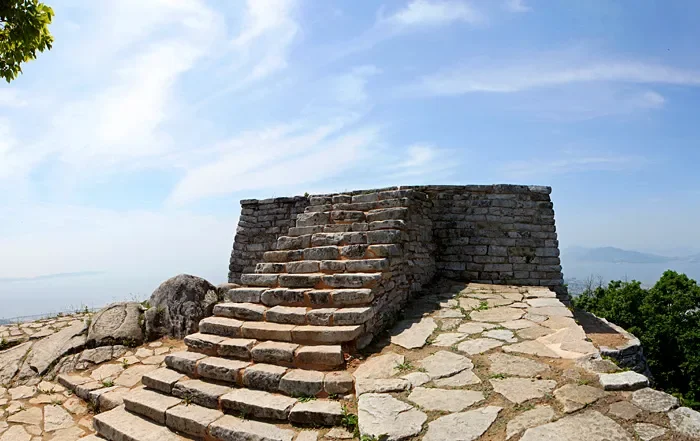
참성단, Chamseongdan, Altar where Danun offered sacrifices to heaven in Ganghwa, Incheon.
Samguk Yusa dates this story to 2333 BC. This isn’t an arbitrary date, but aligns not only with the archeological advancement of humans on the Korean peninsula, but also the true formation of the first kingdom. In the mythology, Dangun reigns for 1,500 years. This terminology can be explained by the use of Dangun as an authoritative title, rather than a single person and this type of history can be found in other areas around the world. It is believed that this history of sacred plus secular, a ruler with spiritual, regal, but practical wisdom was passed on to anchor the legitimacy of Gojoseon’s authority.
Dangun eventually retreats back to Mount Taebaek and becomes a mountain god. Returning to the divine is a cosmic cycle that continues to connect divine energy to human activity. The mountains are seen in Korea as places to connect to the divine. Mountain gods also hold a special place in Korean mythology.
Until 1961, the official tracking of and numbering of years was called Dangi (단기), which began in 2333 BC.
Dangun is the name of the second pattern or teul in the sport of taekwondo.
National Foundation Day is a celebration of Gaecheon (개천), which means “Opening of Heaven,” the moment when Hwanung descended from heaven to Mount Taebaek to live with mankind. Hwanung, a descendent of heaven, established civil society on earth. How much more Korea-centric could a story get? This focus on Korea as being unique, separate and important was a critically important message at time when Japan was taking control of the Korean peninsula.
North Korea’s Interpretation
Mausoleum of Tangun, Kangdong, North Korea.
North Korea also recognizes Gaecheon as well, but not in the same way and not as a national holiday by itself. Kim Il-sung, the DPRK’s first leader, believed in the history of Dangun as an historical figure. He sent archeologists out to find his tomb. In 1993, a tomb was located and purported to be that of Dangun. Their investigation dated the bones found there at 5011 years old. Because of the DPRK’s isolation and secrecy, external investigations of the site have not been allowed. A nail was found at the site that was dated to the Goguryeo period (37 BCE-668 CE) and instead of questioning the age of the artifacts at the site, the DPRK has claimed that the tomb was renovated during this later period. South Korean historians believe the site is from the Goguryeo period.
Nonetheless, Kim Il-sun ordered that a mausoleum be erected at the site. In 1994, the Mausoleum of Dangun has a pyramid built above the gravesite. The site sits on the slope of Mount Taebaek. There is a annual ceremony at the Mausoleum of Dangun, recognizing the history of Koreans.
National Foundation Day Song
The song was originally sung by people who were believers of Daejongism, which is a religion based on the worship of the Dangun myth, founded in 1909. After the National Foundation Day becomes as a national holiday, the lyrics were changed as it is sung nowadays.
Section 1
우리가 물이라면 새암이 있고 If we are water, we would have a fountain that we originated from.
우리가 나무라면 뿌리가 있다. If we are a tree, there must be our roots that we originate from.
이 나라 한아버님은 단군이시니 The great father of this country is Dangun (implying their root and fountain is Dangun).
이 나라 한아버님은 단군이시니 The great father of this country is Dangun.
Section 2
백두산 높은 터에 부자요 부부 In the high place of Mountain Baekdu a father (Hwanin) gave mysterious thing to his son (Hwanung).
성인의 자취 따라 하늘이 텄다. Following the traces of a saint, the heaven has opened.
이날이 시월 상달에 초사홀이니 Since this is the first three days of October that is a harvest month.
이날이 시월 상달에 초사홀이니 Since this is the first three days of October that is a harvest month.
Section 3
오래다 멀다해도 줄기는 하나 The stem is still one, even though it was a long time ago.
다시 필 단쪽잎에 삼천리 곱다 The sandalwood leaves that will bloom again would be beautiful from 3000 li.
잘 받아 빛내오리다 맹세하노니 I swear I would receive it (the stem or the beauty of dangun) and make you (Dangun) shine.
잘 받아 빛내오리다 맹세하노니 I swear I would receive it (the stem or the beauty of Dangun) and make you (Dangun) shine.
Afterthoughts
For people raised in Western countries, Korea’s National Foundation Day may seem a bit odd to focus on as a celebration, because it is wrapped in mythology. However, historians believe that the tiger and the bear at the center of the Dangun myth may actually represent two warring tribes who were trying to make a pact with Dangun and Gojoseon. There might be more historical fact to the story than appears.
Whatever the historic truths, National Foundation Day is a celebration of Korea and everything Korean. It is a day to instill pride in Koreans for being Korean. People gather annually for the holiday to see a huge fireworks display along the Han River in Seoul. Some take the time to climb Baekdu Mountain or Mount Halla on Jeju-do, to remember the mountain origins of the Dangun story and of Koreans and because mountains are literally everywhere in Korea. Dignitaries gather to reflect on the history of Korea. Some Koreans visit burial sites, honoring their ancestors, as another acknowledgement of the continuity of both an individual’s and a country’s history.
Korea’s history is so special and rich. National Foundation Day is a huge example of everything that makes Korea unique and awe inspiring.